


Impact Analysis on Meat Product Quality: Raw Material Selection and Quality Control
Impact Analysis on Meat Product Quality: Raw Material Selection and Quality Control
Why Is Raw Material Selection Critical in Meat Processing?
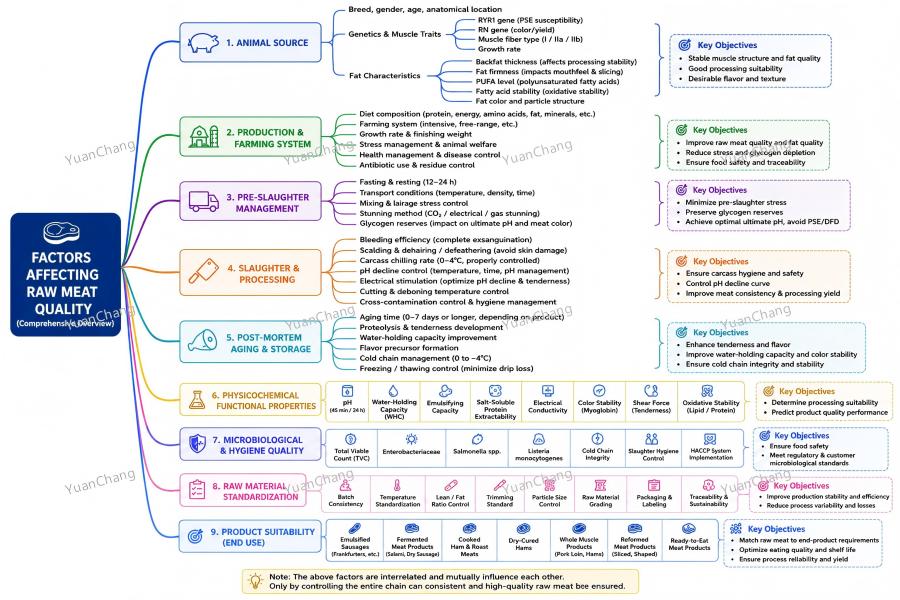
Raw materials are the foundation of meat product quality. No matter how advanced the formulation,
processing technology, or equipment may be, poor-quality raw materials can significantly affect product safety,
texture, flavor, yield, and shelf life.
Based on decades of industry experience and close cooperation with meat processors worldwide,
Hebei Yuanchang Food Machinery has observed that every stage of industrial meat production—including raw
material selection, pre-processing, filling and forming, thermal processing, post-processing, cold-chain logistics,
and retail distribution—plays a critical role in determining final product quality.
Among these stages, raw material control remains the most fundamental factor affecting processing performance,
product consistency, and long-term production stability.
What Raw Materials Are Commonly Used in Meat Processing?
Modern meat products are primarily manufactured using:
Livestock meat (pork, beef, lamb)
Poultry meat (chicken, turkey, duck)
Aquatic protein sources (fish and seafood products)
The selection of raw materials directly influences:
Product quality
Food safety
Processing stability
Production yield
Market acceptance
To achieve consistent product performance, raw material selection should be aligned with formulation requirements, processing technology, and consumer preferences.
Why Does Raw Material Quality Affect Final Product Performance?
Raw material quality influences almost every key performance indicator in meat processing.
Product Texture
The muscle structure, connective tissue content, and fat composition determine the final texture and mouthfeel of meat products.
Water-Holding Capacity
Protein functionality directly affects water retention, cooking loss, and overall product yield.
Flavor Development
Animal breed, feeding conditions, and freshness significantly impact flavor characteristics and consumer acceptance.
Processing Stability
Stable raw materials reduce production variation and improve batch-to-batch consistency.
Shelf Life
High-quality raw materials contribute to improved microbiological stability and extended shelf life.
What Should Meat Processing Engineers Control?
Experienced meat processing engineers should implement full-chain quality management throughout the raw material supply process.
Key control points include:
Animal Breed Selection
Different breeds possess unique muscle structures, fat distribution patterns, and processing characteristics.
Feeding and Farming Conditions
Nutrition, breeding environment, and animal welfare directly influence meat quality and composition.
Slaughtering Procedures
Proper slaughtering practices help maintain product quality and minimize stress-related quality defects.
Post-Slaughter Handling
Temperature control, chilling methods, and transportation conditions are critical for preserving freshness and functionality.
Storage and Logistics
Cold-chain management must be maintained throughout transportation and storage to prevent quality deterioration.
Key Considerations in Raw Material Quality Control
Before raw materials enter production, processors should verify:
Veterinary inspection certificates
Quarantine documentation
Supplier quality reports
Traceability records
Additional critical parameters include:
Freshness
Frozen storage duration
Lean-to-fat ratio
pH value
Moisture content
Protein content
Microbiological status
Strict control of these indicators helps prevent substandard materials from entering the production process.
How Can Food Safety Risks Be Controlled at the Source?
Food safety management should begin with raw material procurement.
Potential risks include:
Microbial contamination
Veterinary drug residues
Heavy metal contamination
Environmental pollutants
Cross-contamination during transportation
Effective supplier management and raw material inspection programs help ensure compliance with international food safety standards and customer requirements.
How Should Raw Materials Match Product Requirements?
Raw material selection should always be based on the target product.
Factors to consider include:
Product formulation
Desired texture
Flavor profile
Fat content
Yield requirements
Processing technology
For example, emulsified sausage products, whole-muscle products, and fermented meat products each require different raw material specifications to achieve optimal performance.
Frequently Asked Questions
What is the most important factor affecting meat product quality?
Raw material quality is one of the most important factors because it influences safety, texture, yield, flavor, and shelf life throughout the production process.
Why is freshness important in meat processing?
Freshness directly affects protein functionality, water-holding capacity, flavor development, and microbiological stability.
How does fat content influence meat products?
Fat content affects texture, mouthfeel, flavor release, emulsification stability, and final product yield.
What documents should be checked before raw materials enter production?
Processors should verify veterinary certificates, quarantine documents, supplier quality reports, and traceability records.
Why is cold-chain management important?
Proper cold-chain management helps maintain freshness, prevent microbial growth, and preserve product functionality during storage and transportation.
Industry Trends in Raw Material Management
As food manufacturers continue to pursue higher quality standards, raw material management is becoming increasingly data-driven.
Modern processing facilities are introducing:
Digital supplier management systems
Raw material traceability platforms
Online quality monitoring
Intelligent warehouse management
AI-assisted quality prediction systems
These technologies help improve quality consistency and strengthen supply-chain control.
Conclusion
Raw material selection is the starting point of meat product quality management. Effective control of raw material quality, supplier management, food safety risks, and cold-chain logistics provides a solid foundation for stable processing performance and high-quality finished products.
By integrating scientific raw material management with advanced processing technology and intelligent equipment, manufacturers can achieve higher product quality, improved production efficiency, and greater market competitiveness.
As a professional manufacturer of meat processing equipment and complete production line solutions, Hebei Yuanchang Food Machinery will continue to share practical insights on raw material management, processing technology, equipment applications, and industry trends through the Knowledge Center.